Residential solar has emerged as a transformative solution for homeowners looking to harness clean energy while reducing utility costs. According to Dr. Emily Carter, a leading expert in renewable energy, "Residential solar not only empowers homeowners to take control of their energy consumption but also significantly contributes to a sustainable future." This technology allows individuals to convert sunlight into electricity, offering both economic and environmental advantages.
The benefits of residential solar extend beyond mere cost savings. By investing in solar panels, homeowners can enhance their property value and gain energy independence, shielding themselves from fluctuating energy prices. Furthermore, adopting residential solar systems plays a crucial role in reducing greenhouse gas emissions, making it an attractive option for those committed to fighting climate change. As we explore the various aspects of residential solar, it becomes clear that this innovative energy solution is not just a trend, but a necessary step toward a sustainable lifestyle.
Residential solar energy refers to the use of solar panels installed on residential properties to convert sunlight into usable electricity. This technology harnesses the power of the sun, providing homeowners with a renewable source of energy. According to the U.S. Department of Energy, solar energy systems can reduce a household’s electricity bills by up to 70%, depending on the size of the system and local energy prices. By utilizing solar energy, homeowners can significantly decrease their reliance on fossil fuels, contributing to larger environmental goals of reducing carbon emissions.
Moreover, the adoption of residential solar is growing rapidly, with the Solar Energy Industries Association reporting a 167% increase in residential solar installations over the past five years. As more homeowners recognize the long-term financial benefits and the contribution to sustainable energy solutions, the shift towards solar energy continues to gain momentum. Furthermore, studies indicate that homes equipped with solar energy systems not only enjoy reduced energy costs but can also increase in market value. Homes with solar panels sell for 4.1% more on average than comparable homes without them, underscoring the financial incentive for residential solar investment.
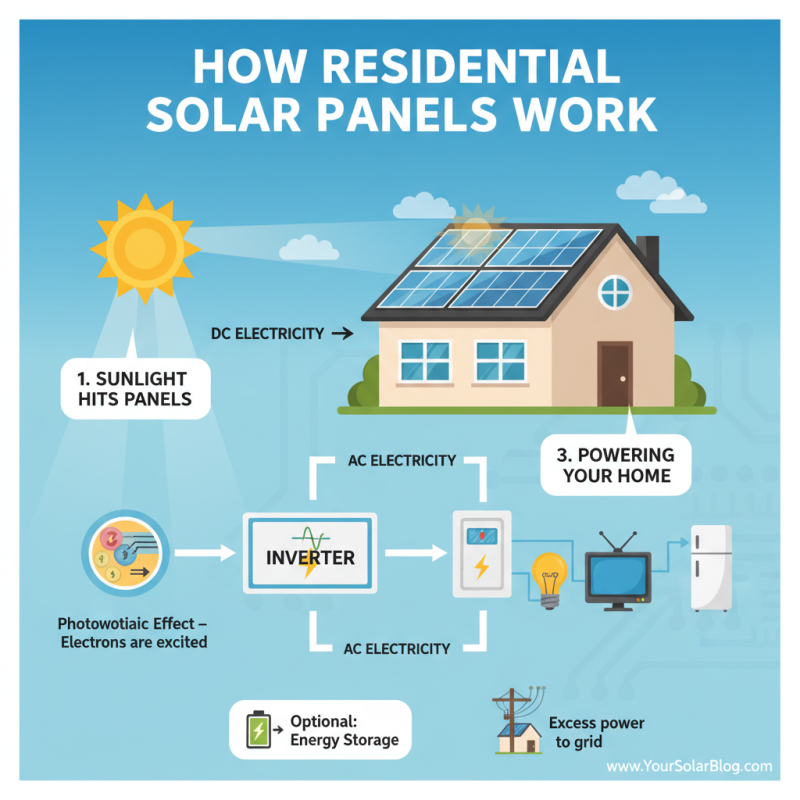
Residential solar panels work by converting sunlight into electricity through a process known as the photovoltaic effect. Each panel is made up of numerous solar cells composed of semiconductor materials, usually silicon. When sunlight hits these cells, it excites electrons, creating a flow of electric current. This direct current (DC) electricity is then sent to an inverter, which converts it into alternating current (AC) electricity that can be used to power household appliances and lighting.
The efficiency of residential solar panels can be influenced by various factors, including the angle and orientation of the panels, the amount of sunlight received, and the temperature. Ideally, panels should be installed in a location that maximizes sun exposure throughout the year. Additionally, advances in solar technology, such as bifacial panels that capture sunlight from both sides and high-efficiency cells, have improved energy output, making solar energy a viable and sustainable option for homeowners. By harnessing solar energy, homes can significantly reduce their reliance on grid electricity and lower their monthly utility bills, while also contributing to environmental sustainability.
The installation of solar panels in residential settings has gained significant momentum over the years, reflecting a greater awareness of environmental sustainability and energy efficiency. One of the primary benefits is the potential for substantial savings on electricity bills. According to the U.S. Department of Energy, homeowners with solar energy systems can save anywhere from $10,000 to $30,000 or more over the lifetime of their panels, depending on location and energy usage. As energy costs continue to rise, this cost-saving potential becomes more appealing to homeowners.
Additionally, the environmental advantages of installing solar panels cannot be overlooked. According to the National Renewable Energy Laboratory (NREL), residential solar can offset approximately 80% of a home's carbon emissions, drastically reducing its ecological footprint. This transition to renewable energy sources not only contributes to a cleaner environment but also enhances the value of the property. A study from Zillow found that homes with solar panels sold for an average of 4.1% more than comparable homes without them. As the shift towards sustainability continues, the demand for energy-efficient homes is likely to grow, making solar energy a wise long-term investment for homeowners.
When considering the installation of residential solar panels, understanding the associated costs and potential savings is crucial for homeowners. The initial costs can vary significantly based on system size, installation specifics, and equipment quality. Homeowners can expect to invest in solar panels, inverters, and installation labor, which together can range from thousands to tens of thousands of dollars. Additionally, many regions offer incentives such as tax credits or rebates that can substantially reduce upfront expenses, making solar energy more accessible.
Once the system is installed, homeowners often experience significant savings on their electricity bills. By generating their own electricity, they can reduce reliance on the grid, leading to lower monthly utility costs. Moreover, in many areas, excess energy produced can be sold back to the grid through net metering, providing even more savings. Over time, the investment in residential solar typically pays off; studies suggest that homeowners can recoup their initial investment within 5 to 10 years, depending on local energy costs and system performance. With increasing energy prices and a growing focus on sustainability, the long-term financial benefits of residential solar are compelling for many households.
Residential solar energy solutions offer a transformative approach to energy consumption in homes worldwide. By harnessing the power of the sun, individuals can significantly reduce their carbon footprint. Traditional energy sources such as coal and natural gas contribute to greenhouse gas emissions, leading to climate change and environmental degradation. In contrast, solar panels generate clean electricity without harmful byproducts, making it an eco-friendly alternative that promotes sustainable living.
Moreover, the adoption of residential solar panels encourages energy independence and resilience. Homeowners who generate their own electricity can lessen their reliance on fossil fuels, which not only helps protect the environment but also enhances energy security. This shift to renewable energy sources reduces air pollution and improves overall air quality, benefiting both local ecosystems and public health. By investing in residential solar energy solutions, homeowners contribute to a cleaner planet, paving the way for a sustainable future while enjoying the immediate benefits of lower energy bills and increased property value.
As electricity costs continue rising, many small households in Maharashtra seek sustainabl...Read More
Uttar Pradesh is making significant progress in adopting renewable energy, particularly so...Read More
With the Indian government actively promoting renewable energy through subsidies and polic...Read More
Tired of watching your electricity bills climb month after month and strain your pockets? ...Read More
Switching to solar energy in Gujarat has never been more profitable! With plenty of sunlig...Read More
If you live in Madhya Pradesh and want to save money on power while living a greener lifes...Read More
If you’re a resident of Bangalore looking to save on your skyrocketing electricity b...Read More
If you live in Karnataka and have been looking for an environmentally friendly, cost-effec...Read More
Delhi is a city that thrives on its vibrant energy, and what better way to complement that...Read More
As electricity costs continue rising, many small households in Maharashtra seek ...Read More
Uttar Pradesh is making significant progress in adopting renewable energy, parti...Read More
With the Indian government actively promoting renewable energy through subsidies...Read More