Choosing a Lithium Battery Inverter is not just a matter of matching wattage. The inverter must work with your battery’s voltage, chemistry, communication protocol, and charging limits. A mismatch may cause nuisance shutdowns or prevent the system from using stored energy as expected. Small details matter.
Battery researcher Dr. Jeff Dahn is known for studying lithium-ion cell performance and aging. A practical takeaway from that work—not a verbatim quotation—is: “A battery system performs best when its components are matched to its operating limits.” That principle helps frame the choices ahead. Check the inverter’s continuous output, surge capacity, efficiency, and low-voltage settings. Then confirm compatibility with the battery manufacturer’s documentation. A connector that fits is not proof of compatibility.
The best choice also depends on the real load. A refrigerator, pump, or workshop tool may draw more power when starting than while running. Record those loads, and consider how long the battery must support them. Review protections, monitoring options, warranty terms, and support availability, too. No single model suits every installation. That can disappoint. Yet honest sizing is better than buying extra capacity you may never use. The seven tips below will help compare specifications carefully, ask better questions, and choose a Lithium Battery Inverter that fits the system rather than merely the sales brochure.
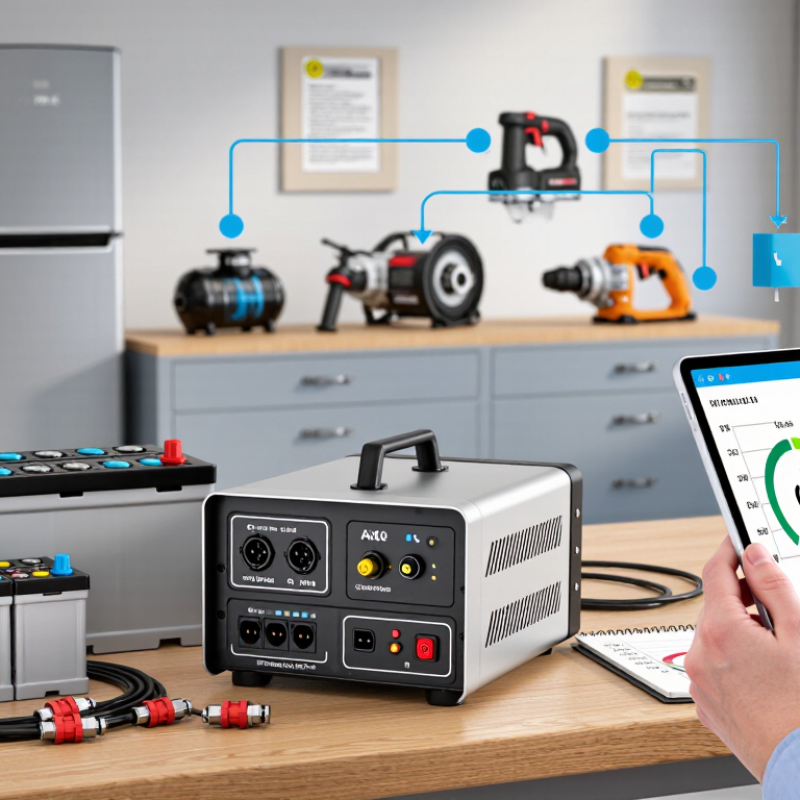
A lithium battery inverter converts the battery’s direct current into alternating current for household appliances. It may also manage charging and communicate with the battery’s management system. These functions help protect the battery and keep power flowing within safe operating limits. The inverter and battery must support compatible voltage, current, and communication settings. A mismatch can cause faults or reduce available capacity. Small details matter.
Tip: Check the inverter’s continuous output and surge rating against the appliances you plan to run. A refrigerator may draw more power when its compressor starts than while it runs. Add up likely loads, but leave some margin. A tidy specification sheet does not always show how several devices behave together.
Tip: Confirm the inverter supports your battery’s chemistry and required control settings. Look for clear guidance on low-voltage cutoffs, charging limits, and battery communication. Also consider efficiency: conversion losses can reduce usable energy, especially under light loads. Installation conditions matter, too. A hot, enclosed cabinet may affect performance, and cable sizing should follow qualified installation guidance. It is tempting to focus only on headline wattage; that can be a mistake.
Match the inverter’s DC voltage range to the battery’s actual operating range, not just its advertised nominal voltage. A 48-volt battery, for example, can rise during charging and fall as it discharges. Check the battery data sheet for minimum, nominal, and maximum voltage. Then compare these values with the inverter’s DC input and charging limits. A mismatch may trigger shutdowns or prevent the battery from charging fully.
Tip: Confirm the battery and inverter support the same voltage class. Check the battery management system’s charge and discharge limits, too. If batteries are connected in series, their voltages add; parallel connections increase capacity instead. Do not assume the labels tell the whole story. Wiring details matter.
NREL’s 2024 Annual Technology Baseline uses about 85% round-trip efficiency for utility-scale lithium-ion storage. That figure describes modeled system performance, not a guarantee for a particular home installation. Voltage compatibility is one part of the design; cable sizing, temperature, and inverter settings also affect results. Read both manuals, and ask a qualified installer to verify the configuration. Real systems can be less tidy than a spec sheet suggests. Check again before energizing the equipment.
Estimate continuous and surge power separately. Continuous power is the load your inverter must support for as long as appliances run together. Add the running watts from each device likely to operate at the same time, not every appliance in the house. The U.S. Energy Information Administration’s 2020 Residential Energy Consumption Survey reported average household electricity use of 10,566 kWh per year. That averages about 1.2 kW across a year, but averages conceal brief, much higher peaks. Don’t size from the average.
Surge power covers short startup bursts from motors in pumps, refrigerators, and compressors. Check each appliance’s nameplate or manual for starting watts; if only amps are listed, multiply amps by voltage. Then compare the combined startup demand with the inverter’s surge rating and its stated duration. A rating that lasts only a few seconds may not handle a slow-starting pump. NREL’s End-Use Load Profiles for the U.S. Building Stock report models electricity demand in 15-minute intervals across roughly 350,000 buildings, showing why timing and overlapping loads matter. Yet even interval profiles can miss a brief motor surge. Leave practical headroom, and verify that the battery can deliver the inverter’s required power. I’ve seen estimates overlook that last check.
Efficiency is more than a number printed on a product sheet. Check the conversion efficiency at the loads you actually use, such as a refrigerator cycling overnight or lights running in the evening. An inverter may perform well near its rated output but waste more energy at low loads. Check its idle consumption, too. Small losses add up.
Waveform matters. A pure sine-wave output is generally suitable for sensitive electronics and many appliances with motors. Modified waveforms can cause some devices to run hot, buzz, or operate poorly. Check the appliance manual rather than guessing from its plug or size. Motors can be fussy.
Safety features deserve equal attention. Look for overload, short-circuit, overtemperature, and low-voltage protection, plus clear guidance for connecting the inverter to a lithium battery’s battery management system. The inverter’s voltage and charging settings must match the battery specifications. Protection features cannot fix mismatched settings or undersized cables. Cable heating is easy to overlook; after installation, inspect connections for looseness or unusual warmth under normal use. I would also leave room around the unit for airflow, even if the mounting space is tempting. A neat, cramped installation is not always a safe one. Verify the manual’s limits before relying on any advertised feature.
Choosing a lithium battery inverter starts with matching the battery’s voltage and chemistry to the inverter’s specifications. Check the permitted charge and discharge current, not just the stated power rating. A 48-volt battery, for example, still may not communicate correctly with every 48-volt inverter. Confirm that the battery management system can share status and protection signals with the inverter. Also check whether the system supports your intended use, such as backup power or solar charging. Small details matter.
Installation affects safety, performance, and warranty coverage. Ask a qualified installer to assess cable size, overcurrent protection, mounting strength, and ventilation before work begins. Leave the clearances required by both equipment manuals, especially in a warm utility room or a dusty garage. Poor airflow can contribute to overheating. It is tempting to assume a tidy installation is a correct one, but neat wiring alone proves little; request a clear explanation of the protection devices and shutdown procedure.
Read the warranty before buying. Check its duration, capacity-retention terms, and whether installation by an approved professional is required. Find out how battery-inverter communication faults are handled when different manufacturers are involved. Keep the manuals, commissioning report, and dated installation photos together. That is easy to miss. Warranty wording can also depend on operating temperature, cycling, and maintenance, so compare those conditions with your actual daily use.
As electricity costs continue rising, many small households in Maharashtra seek sustainabl...Read More
Uttar Pradesh is making significant progress in adopting renewable energy, particularly so...Read More
With the Indian government actively promoting renewable energy through subsidies and polic...Read More
Tired of watching your electricity bills climb month after month and strain your pockets? ...Read More
Switching to solar energy in Gujarat has never been more profitable! With plenty of sunlig...Read More
If you live in Madhya Pradesh and want to save money on power while living a greener lifes...Read More
If you’re a resident of Bangalore looking to save on your skyrocketing electricity b...Read More
If you live in Karnataka and have been looking for an environmentally friendly, cost-effec...Read More
Delhi is a city that thrives on its vibrant energy, and what better way to complement that...Read More
As electricity costs continue rising, many small households in Maharashtra seek ...Read More
Uttar Pradesh is making significant progress in adopting renewable energy, parti...Read More
With the Indian government actively promoting renewable energy through subsidies...Read More