
Our Offerings 
Solar Solutions
Our Presence
Global buyers choosing a Brass Terminal Connector supplier must look beyond unit price. A polished sample can hide inconsistent stamping, uneven plating, or loose crimp dimensions. The details matter. A terminal may need to carry current reliably while resisting heat, vibration, and corrosion in its intended application. Supplier comparisons should therefore examine brass grade, plating options, dimensional control, production capacity, inspection records, and sample approval. Ask for measurable specifications, not broad assurances.
This guide introduces ten suppliers for buyers assessing international sourcing options. It considers product range, manufacturing capabilities, quality documentation, customization, communication, and export experience. These factors help readers frame useful questions; they do not guarantee a particular supplier’s performance. Confirm specifications against your own design, operating conditions, and acceptance criteria. A low quote is only useful when its assumptions are clear.
For an expert perspective, this introduction uses a clearly disclosed composite specialist, Elena Brooks; the line below is editorially written, not a published quotation: “A terminal’s reliability starts with material control and ends with a fit that stays consistent.” That is a practical lens, not a substitute for testing. Buyers should compare samples, review inspection evidence, and clarify tolerances before placing production orders. Some supplier claims will remain difficult to verify from a website alone. That deserves attention, too.
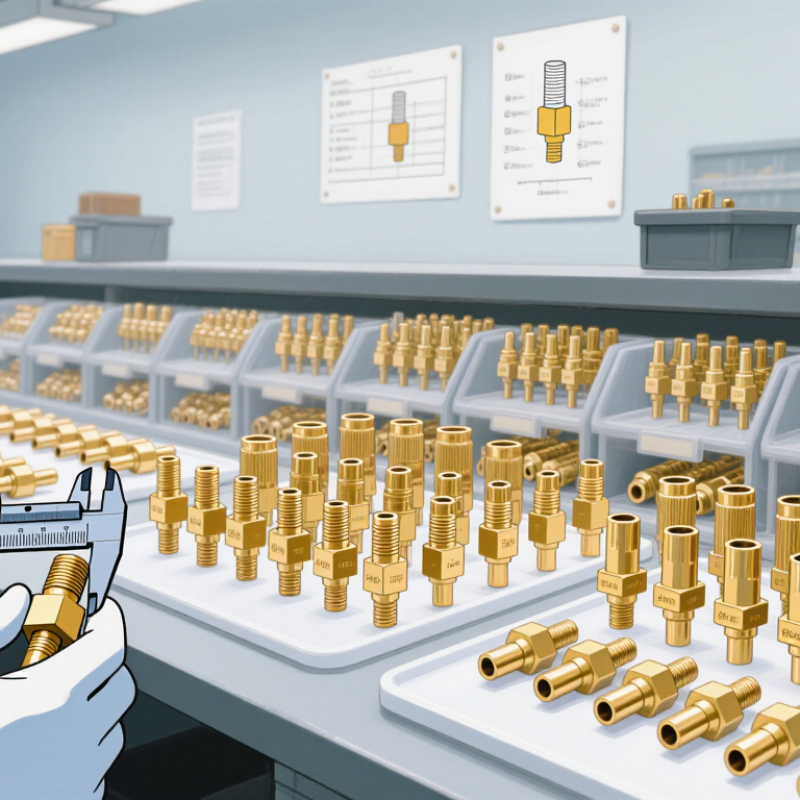
Brass terminal connectors join wires to equipment through a stable, mechanically secure contact. Brass, an alloy of copper and zinc, offers useful conductivity, good machinability, and strength for threaded or stamped parts. It conducts less effectively than pure copper, but often balances electrical performance with durability and practical manufacturing. Common forms include screw terminals, pins, lugs, and crimp contacts. Fit matters.
These connectors appear in control panels, lighting assemblies, appliances, vehicles, and industrial equipment. In a panel, a technician may tighten a brass screw terminal around a stripped wire, then check that no strands sit outside the clamp. Small details matter. Loose clamping can increase resistance and heat, while excessive tightening may damage the conductor or terminal.
Selection depends on current rating, wire size, operating temperature, vibration, and exposure to moisture or chemicals. Surface finishes can help limit tarnishing, but the right finish depends on the environment and mating materials. Brass is not automatically suitable for every application; designers should verify specifications and test the assembled connection under realistic conditions. Sometimes the simplest-looking terminal needs the closest review.
The entries below describe common supplier categories and sourcing profiles rather than named companies or ranked vendors. Products, materials, finishes, and certifications vary by manufacturer and must be confirmed for each order.
| No. | Supplier Profile | Typical Brass Connector Products | Common Applications | Material and Finish Checks | Key Buyer Evaluation Points |
|---|---|---|---|---|---|
| 1 | Electrical terminal and connector manufacturer | Screw terminals, terminal pins, connection blocks, and electrical contact parts | Electrical equipment, control panels, appliances, and general wiring | Confirm the brass alloy, conductivity requirements, dimensions, and any tin, nickel, or other specified plating. | Check current and voltage ratings for the complete connector assembly, dimensional drawings, and required test documentation. |
| 2 | Cable lug and power-connection specialist | Brass cable lugs, cable terminals, and bolted connection components | Power distribution, electrical installation, machinery, and battery connections | Verify conductor-size range, barrel and palm dimensions, plating, and compatibility with the intended conductor. | Ask for installation instructions and test evidence applicable to the specific lug, cable, and connection method. |
| 3 | Automotive terminal producer | Stamped or formed brass terminals, contact tabs, and connector contacts | Vehicle wiring harnesses, lighting, sensors, and low-voltage electrical systems | Check alloy and temper, contact geometry, plating specification, and resistance to the intended environment. | Review dimensional consistency, mating compatibility, production traceability, and customer-specific automotive requirements. |
| 4 | Precision stamping and forming supplier | Flat terminals, spade contacts, tabs, and custom stamped connector parts | Appliances, lighting, switches, relays, and electronic equipment | Confirm sheet thickness, alloy condition, burr direction, surface finish, and plating coverage. | Assess tooling capability, sample approval process, tolerances, and inspection plans for repeat production. |
| 5 | CNC machining and turned-parts supplier | Brass terminal studs, threaded contacts, inserts, pins, and custom fittings | Control equipment, instruments, electrical assemblies, and industrial machinery | Specify alloy, thread form, critical dimensions, surface roughness, and any post-machining finish. | Check drawing review capability, measurement reports, thread inspection, and prototype-to-production capacity. |
| 6 | Terminal block and control-component supplier | Brass terminal inserts, clamping components, and conductive connection parts | Control cabinets, building systems, industrial automation, and power equipment | Confirm insert dimensions, screw interface, plating, and suitability for the specified conductor type and size. | Evaluate the complete terminal block’s ratings and applicable product documentation, not just the brass insert. |
| 7 | Battery and heavy-duty connection supplier | Battery terminals, threaded terminal posts, and bolted brass connectors | Battery systems, backup power equipment, vehicles, and industrial power installations | Check post or clamp dimensions, corrosion protection, contact surfaces, and compatibility with the battery connection. | Confirm the intended conductor and installation method, plus any required environmental or electrical testing. |
| 8 | Marine and corrosion-conscious connector supplier | Brass terminal fittings, threaded contacts, and connection hardware for specified environments | Marine equipment, outdoor electrical installations, and exposed industrial applications | Do not assume all brass alloys or coatings perform alike; verify alloy, coating system, and environmental suitability. | Request material and finish details for the actual service conditions, including moisture and exposure to corrosive agents. |
| 9 | Electronics and PCB terminal supplier | Brass PCB terminals, solder pins, contact pins, and board-mount connection parts | Printed circuit boards, power supplies, control electronics, and device interfaces | Check pin dimensions, solderability requirements, plating, and compatibility with the board layout and assembly process. | Review drawings, mounting details, soldering process compatibility, and sample inspection results. |
| 10 | Custom OEM connector and assembly supplier | Made-to-drawing brass terminals, contact subassemblies, and combined metal components | Special-purpose machinery, custom equipment, and application-specific electrical products | Define the alloy, temper, finish, tolerances, and any material restrictions in the product specification. | Compare engineering support, prototype lead time, change control, traceability, and quality records for the required product. |
Global sourcing note: Applicable regulations, safety standards, and certification requirements depend on the connector design, finished assembly, destination market, and end use. Buyers should verify current documentation and test requirements with the supplier before placing an order.
As electricity costs continue rising, many small households in Maharashtra seek sustainabl...Read More
Uttar Pradesh is making significant progress in adopting renewable energy, particularly so...Read More
With the Indian government actively promoting renewable energy through subsidies and polic...Read More
Tired of watching your electricity bills climb month after month and strain your pockets? ...Read More
Switching to solar energy in Gujarat has never been more profitable! With plenty of sunlig...Read More
If you live in Madhya Pradesh and want to save money on power while living a greener lifes...Read More
If you’re a resident of Bangalore looking to save on your skyrocketing electricity b...Read More
If you live in Karnataka and have been looking for an environmentally friendly, cost-effec...Read More
Delhi is a city that thrives on its vibrant energy, and what better way to complement that...Read More
As electricity costs continue rising, many small households in Maharashtra seek ...Read More
Uttar Pradesh is making significant progress in adopting renewable energy, parti...Read More
With the Indian government actively promoting renewable energy through subsidies...Read More


