
Choosing among China Ev Charging suppliers is not simply a matter of comparing prices. Global buyers must examine safety certifications, charging standards, software compatibility, manufacturing consistency, and long-term service capability.
Zhang Yongwei, vice chairman of China EV100, has said, “Charging infrastructure is the foundation of the new energy vehicle ecosystem.” His view reflects a practical reality. A charger may look impressive in a showroom, yet fail under heat, dust, voltage fluctuations, or heavy daily use. Reliability matters more than appearance.
This guide introduces ten leading China EV Charging suppliers for international buyers. It considers product range, AC and DC charging performance, GB/T, CCS, and OCPP compatibility, export experience, customization, and technical support. Factory audits, warranty terms, spare-parts availability, and response times also deserve attention. A low purchase price can become expensive when installation guidance is weak or replacement components arrive late.
Some rankings remain debatable. No supplier is ideal for every market. Local grid conditions, climate, connector regulations, payment systems, and installer skills can change the final decision. That is why this selection uses practical evaluation rather than brand popularity alone.
Buyers should still verify current certificates, test reports, and references before signing contracts. A supplier’s website is not enough. Ask for evidence.
The strongest partners usually offer more than hardware. They provide commissioning support, monitoring platforms, firmware updates, and clear technical documentation. Those details are easy to overlook. They often determine whether a charging project performs smoothly after launch.
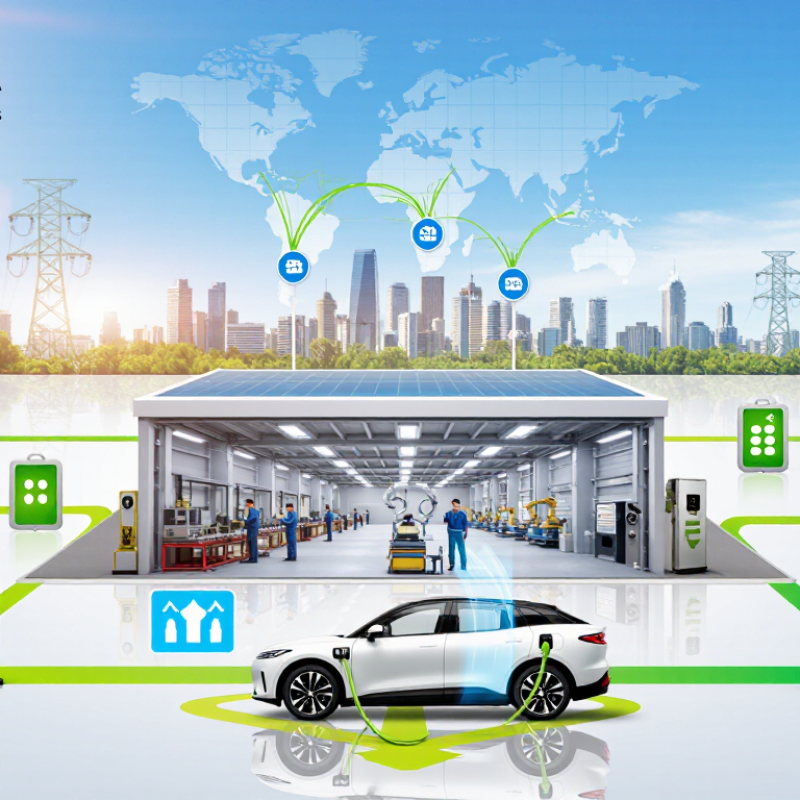
China’s EV charging industry has grown from a domestic infrastructure project into a major global supply force. Manufacturers now produce home chargers, destination units, and high-power direct-current systems at different price levels. Large-scale factories support faster production, while engineering teams adapt equipment for varied climates, grids, and vehicle standards.
For global buyers, supplier quality depends on more than factory size. Reliable partners should provide documented testing, traceable components, software security controls, and certifications accepted in the target market. They should also explain connector compatibility, load management, warranty coverage, and spare-part support clearly. Field experience matters. A charger operating beside a humid coastal road faces different risks from one installed in a cold logistics depot.
China’s market role also brings practical lessons. Strong supply chains can reduce lead times and encourage competitive pricing, but low quotes may hide weaker support or incomplete testing. Buyers should request independent inspection reports, pilot installations, and service response records before signing large contracts. Ask difficult questions early. Communication can still fail across languages, time zones, and technical assumptions. Even experienced teams sometimes overlook installation training or local grid limitations. That gap deserves attention, especially when public charging networks must serve drivers safely and consistently.
Choosing among the 10 best China EV charging suppliers requires more than comparing prices. The IEA’s Global EV Outlook 2024 reports that China held more than half of the world’s public charging points in 2023. This scale shows manufacturing strength, but not automatic reliability. Buyers should inspect production testing, traceable components, and documented failure rates.
Technical compatibility deserves close attention. Ask whether chargers support current OCPP versions, ISO 15118 readiness, load balancing, and remote diagnostics. Certification must match the destination market, including electrical safety and electromagnetic compatibility rules. The U.S. National Renewable Energy Laboratory highlights interoperability as a continuing challenge in public charging networks. A charger that works in a laboratory may still fail during roaming, payment, or firmware updates.
Service evidence matters more than polished presentations. Request field uptime data, response times, spare-parts locations, and warranty exclusions. A practical factory audit should include burn-in testing and simulated voltage fluctuations. Cybersecurity procedures should cover access control, software signing, and vulnerability response. The International Energy Agency expects public charging demand to expand sharply through 2035, increasing pressure on support teams. Some suppliers provide impressive specifications but weak local service. That gap deserves honest scrutiny. A lower purchase price may become expensive after repeated site visits, delayed parts, or incompatible software.
International buyers are evaluating ten leading China EV charging suppliers as global demand accelerates. The IEA’s Global EV Outlook 2024 reported more than four million public charging points worldwide in 2023. China represented over half of that installed base. This scale gives Chinese manufacturers practical experience with high-volume production, outdoor deployment, and fleet charging.
A serious supplier review should examine more than factory pricing. Ask for test reports, production records, warranty terms, and spare-parts plans. For residential projects, 7 kW AC units may suit overnight charging. Commercial sites often require 60–240 kW DC equipment, liquid-cooled cables, and load balancing. Check support for OCPP 1.6 or 2.0.1, remote diagnostics, and local grid requirements. Certification must match the destination market, such as CE, UL, or other applicable standards.
Look closely at communication quality. A supplier that answers technical questions clearly is easier to manage after installation. Request sample units before a large purchase. Test touchscreen visibility in sunlight, cable temperature, emergency stops, and software recovery after network loss. The IEA also notes that public charging demand will rise sharply as electric vehicle sales expand, increasing pressure on uptime and maintenance. No supplier is perfect. Numbers can mislead. A polished factory tour cannot replace field data, independent testing, and references from comparable climates. International buyers should compare delivered cost, not only the quotation. Shipping, installation, software, replacement parts, and technician training can change the final result.
China Public EV Charging Infrastructure Growth, 2020–2024
China’s public charging network expanded rapidly, increasing from approximately 807,000 public charging points in 2020 to 3.58 million in 2024. This market scale highlights the manufacturing capacity, deployment experience, and export potential that international buyers may evaluate when selecting China-based EV charging suppliers.
Source: China Electric Vehicle Charging Infrastructure Promotion Alliance (EVCIPA), cumulative public charging infrastructure statistics.
Choosing among China’s leading EV charging suppliers requires more than comparing prices. Start with charger types: AC wall boxes suit homes and offices, while DC fast chargers serve highways, fleets, and commercial parking areas. Check output ranges, cooling methods, enclosure ratings, and cable length. A 22 kW AC unit may need suitable three-phase power. A 180 kW DC charger may require costly grid upgrades.
Standards determine whether equipment works smoothly overseas. Confirm IEC 61851 and IEC 62196 compatibility, plus the regional connector, such as CCS2 or GB/T. ISO 15118 support can enable smart charging and future plug-and-charge features. Ask for test reports, safety certificates, and clear declarations of conformity. Certificates alone are not enough. Their scope and expiry dates matter.
Tips: Request a live software demonstration before ordering. Review OCPP support, remote diagnostics, load balancing, user authentication, and payment integration. Export-ready suppliers should provide manuals, spare-parts lists, packaging details, and customs documents. Confirm firmware update procedures and data hosting locations. Speak with a technical engineer, not only a sales representative. Factory audits and sample testing reduce surprises, although neither guarantees perfect delivery. I would also test one charger in the target country first; assumptions about voltage, cellular networks, and local installation practices can fail quickly. Reliability is proven in operation, not promised in a brochure.
Choosing a Chinese EV charging supplier requires more than comparing prices. Global buyers should examine engineering experience, production capacity, and export records. A supplier may offer impressive samples but struggle with stable volume delivery. Request factory audit reports, production photos, and traceable quality records. Ask who controls testing, assembly, and final inspection.
Test the charger in conditions similar to your market. Check connector durability, software compatibility, payment functions, weather resistance, and protection against overheating. Request current reports from recognized testing laboratories, not only internal documents. Confirm compliance with applicable regional standards before placing a large order. A clear warranty matters too. Define response times, spare-parts support, firmware updates, and responsibility for field failures. Small details become expensive later.
Tips: Start with a pilot order. Inspect random units independently. Compare test results with your technical requirements. Keep written specifications, drawings, and acceptance criteria. Visit the factory if practical, or use a qualified third-party auditor. Do not rely on polished online communication alone. I once underestimated after-sales coordination; the hardware worked, but replacement procedures were unclear. That experience changed my supplier checklist. Language, time zones, and technical terminology can also create avoidable delays. Choose a supplier that answers difficult questions directly, records corrective actions, and accepts reasonable verification before signing a long-term agreement.
How Global Buyers Can Select the Right Chinese Supplier
| Rank | Supplier Evaluation Dimension | Recommended Benchmark | Evidence Global Buyers Should Request | Why It Matters | Assessment |
|---|---|---|---|---|---|
| 1 | International Charging Standards | Support the target-market requirements of IEC 61851 and IEC 62196, plus the applicable regional connector standard. | Current test reports, declarations of conformity, connector specifications, and regional compliance documents. | Prevents incompatibility with local vehicles, electrical systems, and public-charging regulations. | Critical |
| 2 | Connector and Grid Compatibility | Offer the connector, voltage, frequency, and phase configuration required by the destination market. | Electrical datasheets showing input voltage, frequency, phase, output current, connector type, and cable rating. | A technically compliant charger may still fail if its connector or grid input does not match the installation. | Critical |
| 3 | Power Output Portfolio | AC products commonly cover approximately 3.6–22 kW; DC products should be selected according to site capacity and vehicle demand. | Model-level output curves, rated power, maximum current, derating conditions, and power-sharing specifications. | Matching power to the site avoids unnecessary infrastructure cost and protects charging performance. | High |
| 4 | Communication and Backend Integration | Support OCPP 1.6J or OCPP 2.0.1 where required, with documented APIs or tested backend integration. | Protocol version, supported functions, integration guide, sandbox access, and interoperability test results. | Open communication reduces dependence on a single software platform and supports roaming or fleet management. | Critical |
| 5 | Safety and Protection Functions | Include overcurrent, overvoltage, short-circuit, overtemperature, residual-current, surge, and emergency-stop protection as applicable. | Protection schematic, failure-mode test records, residual-current protection details, and emergency-stop test results. | Safety functions reduce risks to users, vehicles, equipment, and the electrical installation. | Critical |
| 6 | Environmental Durability | Specify an enclosure rating appropriate to the installation; outdoor equipment commonly requires a documented IP rating such as IP54 or higher. | IP test report, operating-temperature range, humidity limits, corrosion test data, and installation manual. | Outdoor chargers face rain, dust, temperature changes, salt exposure, and mechanical stress. | High |
| 7 | Quality Management and Traceability | Maintain a documented quality-management system, incoming inspection, production testing, and serial-number traceability. | Quality certificates, factory-audit records, inspection plans, sample test reports, and serial-number procedures. | Traceability makes warranty analysis, corrective action, and batch control more reliable. | High |
| 8 | Customization and Private-Label Capability | Provide controlled customization for enclosure, labeling, language, firmware settings, cable configuration, and packaging. | Customization list, engineering-change process, artwork approval workflow, sample policy, and firmware-release controls. | Structured customization is safer than uncontrolled changes that may affect certification or reliability. | Medium |
| 9 | Warranty and After-Sales Support | Define warranty duration, covered components, response times, spare-parts availability, remote diagnostics, and repair responsibility in writing. | Warranty terms, service-level agreement, troubleshooting guide, spare-parts list, and escalation contacts. | Downtime and service costs can exceed the initial purchase-price difference over the product life. | Critical |
| 10 | Export Execution and Total Cost | Evaluate landed cost rather than unit price, including tooling, certification, freight, duties, installation, software, spare parts, and support. | Formal quotation, Incoterms, packaging specification, lead-time schedule, export references, and total-cost calculation. | A transparent commercial structure reduces delays, hidden costs, and supply-chain risk. | Critical |
Buyer note: No supplier should be ranked on price alone. Confirm every claim with current model-level documentation, independent test evidence, a production sample, and a written commercial agreement.
As electricity costs continue rising, many small households in Maharashtra seek sustainabl...Read More
Uttar Pradesh is making significant progress in adopting renewable energy, particularly so...Read More
With the Indian government actively promoting renewable energy through subsidies and polic...Read More
Tired of watching your electricity bills climb month after month and strain your pockets? ...Read More
Switching to solar energy in Gujarat has never been more profitable! With plenty of sunlig...Read More
If you live in Madhya Pradesh and want to save money on power while living a greener lifes...Read More
If you’re a resident of Bangalore looking to save on your skyrocketing electricity b...Read More
If you live in Karnataka and have been looking for an environmentally friendly, cost-effec...Read More
Delhi is a city that thrives on its vibrant energy, and what better way to complement that...Read More
As electricity costs continue rising, many small households in Maharashtra seek ...Read More
Uttar Pradesh is making significant progress in adopting renewable energy, parti...Read More
With the Indian government actively promoting renewable energy through subsidies...Read More