Top China Rooftop Panel Manufacturers for Global Buyers

Global rooftop solar is moving from a niche solution to a mainstream energy asset. According to the IEA PVPS Trends 2024 report, worldwide photovoltaic capacity exceeded 1.6 terawatts by the end of 2023. China contributed a significant share of new installations. Its manufacturing base also remains central to global supply. The IEA’s Solar PV Global Supply Chains report found that China held more than 80% of manufacturing capacity across major solar value-chain stages.

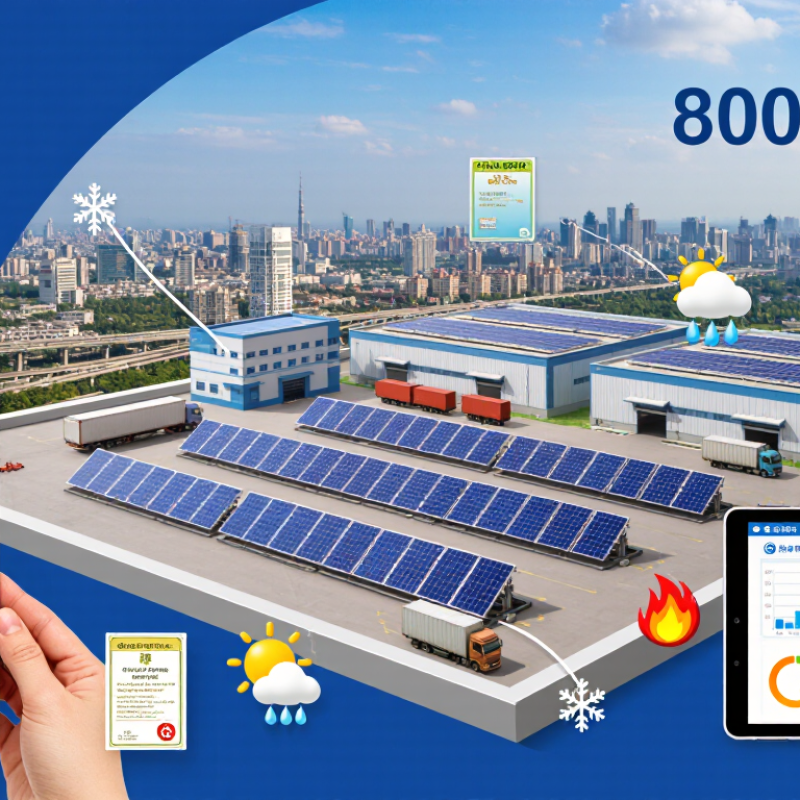
For global buyers, selecting a Chinese rooftop panel manufacturer requires more than comparing wattage and price. A reliable assessment should examine module efficiency, temperature coefficient, annual degradation, warranty terms, and independent certification. IEC 61215 and IEC 61730 compliance matters. So do factory quality controls, traceability, and realistic delivery records. The right panel must also suit local wind, snow, humidity, hail, and fire requirements. A product tested in a dry warehouse may face very different conditions on a coastal roof.

Details matter most.

Leading Chinese suppliers increasingly offer n-type TOPCon, heterojunction, and lightweight modules for commercial rooftops. However, technical labels can distract buyers from practical performance. BloombergNEF’s module bankability research and independent testing from organizations such as PVEL can support a more balanced review. No ranking is perfect. Manufacturer data may appear stronger than long-term field evidence, especially for newer technologies. This guide therefore compares China’s leading rooftop panel manufacturers through documented performance, production experience, quality assurance, export capability, and buyer risk. Cost still matters, but the cheapest module can become expensive when replacement access, degradation, or local certification is overlooked.
Top China Rooftop Panel Manufacturers for Global Buyers

What Rooftop Solar Panels Are and Why China Leads Manufacturing

Rooftop solar panels are photovoltaic modules installed on homes, warehouses, factories, and commercial buildings. They convert sunlight into direct-current electricity, which an inverter changes into usable power. A typical system includes panels, mounting rails, cables, protection devices, and monitoring equipment. From an installer’s viewpoint, roof strength, panel dimensions, shade, drainage, and cable routes matter as much as rated power. A high-output panel is not automatically the best choice.

China leads rooftop panel manufacturing through a dense, efficient supply chain. Polysilicon, wafers, cells, glass, frames, and electronics are often produced within connected industrial regions. Large factories support automation, process improvement, and competitive pricing. Skilled engineers also help manufacturers adjust products for humid coasts, snowy regions, and high-temperature roofs. However, scale can hide weaknesses. Buyers should not judge quality by price alone.

Tips: Request independent test reports, production traceability, warranty terms, and sample inspections. Check temperature coefficients and mechanical-load ratings for the installation climate. Ask whether the supplier can provide consistent documentation and replacement support. Factory audits are useful, but they are not perfect. Compare measured performance, not only brochure numbers. A careful buyer should also confirm packaging strength, because cracked glass may appear after a long sea journey.
How to Evaluate China’s Top Rooftop Panel Manufacturers

China’s rooftop panel manufacturers deserve evaluation beyond price and catalog size. IRENA’s Renewable Capacity Statistics 2024 reports that global solar capacity increased by about 346 GW in 2023. This rapid expansion raises procurement pressure and quality risks. Global buyers should request IEC 61215 and IEC 61730 test records, not only certificates printed in a sales brochure. Check whether the documents match the exact panel model, factory, and production date.

Look closely at factory controls. Ask for EL inspection images, cell traceability records, soldering controls, and independent audit results. A useful sample inspection includes frame alignment, connector sealing, glass thickness, and visible microcracks. Small details matter on a windy rooftop. The IEA PVPS Trends 2024 report places global photovoltaic capacity near 1.4 terawatts by the end of 2023, making long-term reliability increasingly important. Compare degradation guarantees, temperature coefficients, fire classifications, and warranty exclusions in plain language.

Price is only one variable. Request a 12-month production history, shipment references, and evidence of consistent power tolerances. Verify whether the manufacturer can support local grid rules and rooftop loading limits. A polished factory tour is not enough. I would also inspect the proposed packaging, because damaged corners often appear after ocean transport, not during production. Some evaluations remain imperfect; supplier claims still require independent testing. A serious manufacturer should accept that scrutiny without delaying documentation.

Leading Chinese Rooftop Panel Manufacturers for Global Buyers

Leading Chinese rooftop panel manufacturers serve global buyers with large production capacity, varied module designs, and competitive export experience. Reliable suppliers usually provide clear electrical specifications, factory quality procedures, and traceable test reports. Buyers should check power output, temperature performance, frame strength, and degradation guarantees before comparing prices.

A practical review should include factory audit records, sample testing, and references from similar climates. Ask how panels perform under strong heat, heavy rain, snow, or coastal salt exposure. Confirm product certification for the destination market, shipping terms, packaging details, and warranty responsibilities. A low quote may look attractive. It can hide weaker materials or limited after-sales support. I have seen specifications that seemed complete but lacked vital information about connectors and installation conditions. That deserves careful questioning.

Tips: Request an independent inspection before shipment. Compare several samples, not one panel. Check serial-number traceability and production dates. Ask for a written response time for warranty claims. Also review local roof-load rules and installer requirements. Chinese manufacturers may offer useful customization, but unusual dimensions can increase replacement costs. Buyers should leave room for uncertainty, because weather data, logistics delays, and installation quality can change real-world results.

Top China Rooftop Panel Manufacturers for Global Buyers - Leading Chinese Rooftop Panel Manufacturers for Global Buyers

Product Category Typical Power Range Cell Technology Typical Module Efficiency Common Module Format Key Certifications Typical Product Warranty Suitable Rooftop Application
Standard Monocrystalline Module 400–550 W PERC or upgraded passivated mono cells 20%–22% Suitable for residential and small commercial roofs IEC 61215, IEC 61730; regional approvals may vary 10–15 years product; up to 25–30 years performance Residential roofs, small offices, schools and retail buildings
N-Type TOPCon Module 430–620 W N-type tunnel oxide passivated contact cells 21%–23.5% Usually offered in larger commercial formats IEC 61215, IEC 61730; verify local grid and fire requirements 12–15 years product; up to 30 years performance Commercial rooftops where higher yield and lower degradation are priorities
Bifacial Glass-Glass Module 450–650 W N-type or other high-efficiency bifacial cells 21%–23.5% front-side efficiency Dual-glass construction with transparent rear side IEC 61215, IEC 61730; additional hail, salt-mist or ammonia tests may apply 12–20 years product; up to 30 years performance Reflective roofs, elevated systems and large commercial installations
Lightweight Rooftop Module 250–450 W Monocrystalline silicon or lightweight laminate design 18%–22% Reduced-weight frame or flexible construction IEC certification depends on construction; structural testing is essential 5–15 years product; performance term varies by design Older roofs, warehouses with limited load capacity and metal roofs
Small-Format Residential Module 350–500 W Half-cut monocrystalline cells 19%–22.5% Compact dimensions for complex roof layouts IEC 61215 and IEC 61730 are commonly requested 10–15 years product; 25–30 years performance Homes with dormers, chimneys, skylights or limited roof area
High-Load Commercial Module 500–700 W Large-format mono cells, commonly n-type or equivalent 20.5%–23.5% Large modules requiring compatible racking and logistics IEC 61215, IEC 61730; mechanical-load testing should be reviewed 12–15 years product; up to 30 years performance Factories, logistics centers, agricultural buildings and distribution facilities
High-Temperature Rooftop Module 400–650 W Temperature-optimized monocrystalline cell technology 20%–23% Standard framed or glass-glass formats IEC 61215 and IEC 61730; temperature coefficients must be stated on the datasheet 10–15 years product; up to 30 years performance Hot climates, low-ventilation roofs and regions with high solar irradiance
Coastal and Corrosion-Resistant Module 400–650 W Monocrystalline cells with corrosion-resistant materials 20%–23% Framed or dual-glass construction IEC 61701 salt-mist testing should be confirmed for coastal projects 10–20 years product; performance term varies by model Coastal factories, ports, resorts and marine-influenced environments
Low-Light Performance Module 350–600 W High-efficiency mono cells with improved spectral response 20%–23% Residential or commercial framed format IEC 61215 and IEC 61730; low-light claims should be supported by test data 10–15 years product; 25–30 years performance Cloudy regions, northern climates and roofs with partial shading
Customized OEM Rooftop Module Power rating specified by project Mono, TOPCon, bifacial or other agreed cell configuration Specified according to the approved design Custom dimensions, color, junction box or labeling may be available Certification scope must match the final customized design Contract-specific; confirm warranty exclusions and claim procedure Projects requiring special dimensions, packaging, documentation or private labeling

Note: The specifications above represent typical market ranges for rooftop photovoltaic modules supplied from China. Actual values depend on the selected model, production batch, certification scope, installation environment and purchase agreement. Buyers should request the current datasheet, third-party test reports, warranty terms, factory inspection records and applicable regional certifications before ordering.

Comparing Products, Certifications, Prices, and Production Capacity

China’s rooftop panel manufacturers serve global buyers with varied product quality, certifications, prices, and production capacity. A serious comparison should begin with panel specifications, not the lowest quotation. Check power output, efficiency, temperature coefficient, warranty terms, and performance in low-light conditions. For compact rooftops, higher-efficiency modules may reduce installation space and labor costs.

Certifications require careful verification. Request current test reports for IEC 61215 and IEC 61730, plus ISO 9001 records for quality management. Local market requirements may also require additional marks or documentation. During factory evaluations, review cell traceability, electroluminescence testing, aging tests, and final inspection records. Production capacity matters, but advertised annual capacity can be misleading. Ask for monthly output, current utilization, lead times, and recent shipment evidence. A large factory is not automatically a reliable supplier.

Tips: Compare prices using the same terms, such as FOB or CIF, and include packaging, insurance, testing, and replacement costs. Ask for a small sample order before signing a large contract. The cheapest offer often hides weaker documentation or longer delivery risk. Still, certification files can become outdated, and even a detailed audit may miss occasional defects. Keep that limitation visible in your evaluation. A practical scorecard should measure cost, verified quality, delivery consistency, communication, and after-sales support together.

How to Select, Verify, and Import a Chinese Rooftop Panel Supplier

China remains a major source of rooftop solar panels for global buyers. The International Energy Agency Photovoltaic Power Systems Programme reported about 456 GW of new photovoltaic capacity worldwide in 2023. That scale creates choice, but also creates noise.

Select suppliers by evidence, not polished websites. Request recent IEC 61215 and IEC 61730 test reports, an ISO 9001 certificate, product datasheets, and serial-number traceability. Check whether certificates match the exact model and factory address. Ask for a bill of materials, cell origin, power tolerance, temperature coefficient, and degradation terms. Small details matter.

Visit the production line, or appoint an independent auditor. Review incoming-cell inspection, lamination records, electroluminescence images, flash-test results, and final packaging. The IEA PVPS Trends report highlights continuing module price pressure, so unusually low quotations deserve careful investigation. Cheap is not automatically efficient.

Import planning needs equal attention. Confirm the correct customs classification, destination certification, labeling, pallet dimensions, moisture protection, and insurance responsibilities. Use a written purchase contract with inspection rights, defect procedures, delivery terms, and payment milestones. Verify that the supplier can support your target market’s grid and fire requirements. Ask for references from comparable rooftop projects, not only trading statistics. A factory may pass one audit and still fail later. Recheck critical documents before shipment.

Typical crystalline-silicon rooftop module power ranges by common cell format. These indicative ranges help global buyers compare supplier proposals; actual output depends on efficiency, module dimensions, and the manufacturer’s certified datasheet.