Who Are the Top Solar Panel Manufacturers in China?
China has become a central force in the global solar panel industry, with manufacturers supplying projects from rooftop arrays to vast utility-scale farms. Names such as LONGi, JinkoSolar, Trina Solar, JA Solar, and Canadian Solar often appear in buyer shortlists. Yet “top” does not mean the same thing to every buyer. Production volume, cell technology, financial strength, warranty terms, and after-sales support can point to different leaders.
The wider market offers useful context. Fatih Birol, Executive Director of the International Energy Agency, said, “Solar is becoming the new king of electricity markets around the world.” That growth makes careful comparisons more important, not less. A panel’s dark glass and slim frame may look similar across brands, while its efficiency, degradation rate, and performance in heat differ. Small details matter.
This guide examines leading Chinese manufacturers and the evidence behind their reputations. It considers product ranges, manufacturing scale, research and development, and access to global service networks. Company rankings can change as production expands, prices move, and new technologies mature. So can buyer priorities. A low quoted price is tempting, but it does not tell the whole story. Readers should check current datasheets, independent test results, and warranty conditions before making decisions. No single company is best for every project. That answer is less tidy than a league table, but more useful.
China’s Role in the Global Solar Panel Manufacturing Industry
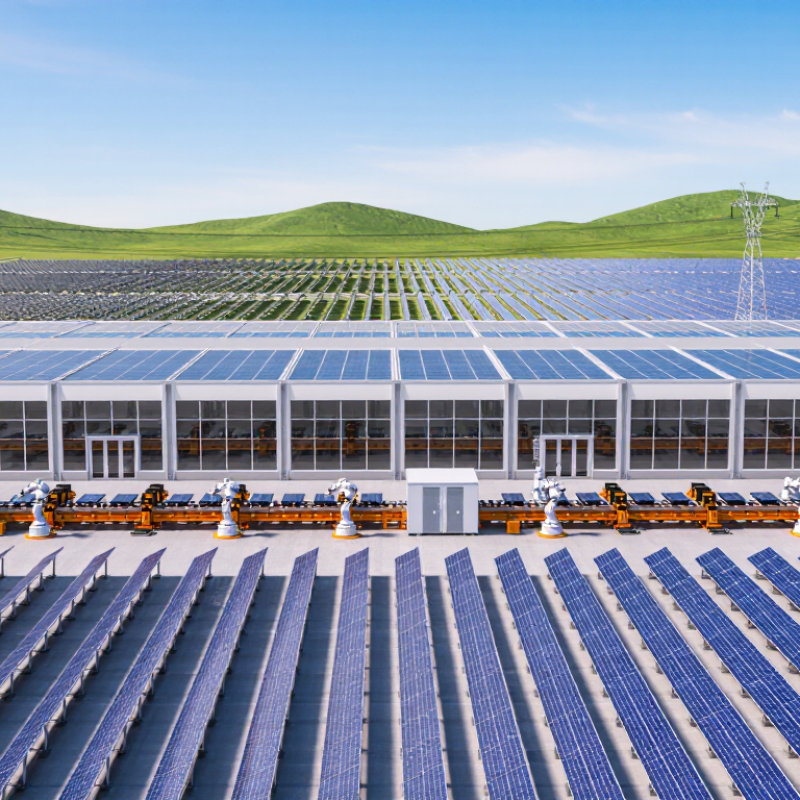
China’s role in solar manufacturing reaches across the supply chain. The IEA’s 2024 manufacturing review estimates China holds over 80% of global capacity across key solar-PV stages. Wafer capacity approaches 95%. That footprint links production of polysilicon, wafers, cells, and finished modules with equipment suppliers and port logistics. Large, coordinated production can shorten lead times and support lower costs. Scale matters. Yet concentrated production can expose buyers to freight disruptions, policy shifts, or upstream bottlenecks.
IRENA’s Renewable Power Generation Costs in 2023 reports a 90% fall in the global weighted-average cost of utility-scale solar electricity since 2010. Technology improvements and competitive manufacturing both contributed; that decline should not be credited to one country alone. Numbers need context. Manufacturing capacity does not equal annual output, and announced factories may not operate at full utilization. For project developers, practical checks include module quality records, delivery schedules, warranty terms, and traceable component data. These details determine whether manufacturing scale translates into dependable supply.
How Solar Panel Manufacturers Are Evaluated
Evaluating a solar panel manufacturer takes more than comparing quoted prices or nameplate efficiency. Buyers should examine the evidence behind each specification. Ask for independent test reports, production quality records, and clear explanations of how products perform under heat, humidity, and mechanical stress. A polished brochure is not enough.
Look closely at factory quality controls. Inspect how incoming cells are checked, how panels are sealed, and whether finished units receive visual and electrical testing. Electroluminescence images can reveal hidden cell cracks that ordinary visual checks may miss. Request sample reports with dates and batch references, then confirm that testing applies to the model being offered. Details matter.
Certifications, product warranties, and traceable serial numbers also help assess reliability, but paperwork needs context. Check who issued the documents and whether they remain current. Compare warranty terms carefully: coverage periods alone do not explain claim procedures or exclusions. Field performance data and service response records can offer useful perspective, though a few successful installations prove little. A factory visit helps, but it can still miss problems that appear months later. I would not treat any single metric as decisive. Consider consistency across records, products, and customer support before making a choice.
Leading Solar Panel Manufacturers in China
Leading Solar Panel Manufacturers in China
China’s solar manufacturers lead a supply chain spanning polysilicon, wafers, cells, and finished modules. The International Energy Agency’s 2022 report, Solar PV Global Supply Chains, found that China held over 80% of global manufacturing capacity across these stages. Its share of wafer production was close to 95%. Scale matters. But capacity is not the same as dependable output. Buyers should examine independent test results, product warranties, and whether a manufacturer can provide consistent specifications across large orders.
The IEA PVPS report Trends in Photovoltaic Applications 2024 recorded about 447 GW of new solar capacity worldwide in 2023, reflecting strong demand for modules. For manufacturers, that means pressure to expand production while maintaining quality. Useful checks include cell efficiency, temperature performance, degradation rates, and traceable quality-control records. Ask how modules perform in heat, dust, or low-light conditions—not only under ideal laboratory testing. A practical caution: published efficiency figures alone do not reveal long-term field reliability. Factory scale is easy to compare; consistent performance is harder. I would treat capacity rankings as a starting point, not a final purchasing decision.
Who Are the Top Solar Panel Manufacturers in China? — Leading Solar Panel Manufacturers in China
| Manufacturing Stage |
China’s Share of Global Manufacturing Capacity (2021) |
Role in Solar Panel Production |
Industry Context |
| Polysilicon |
79% |
Supplies the purified silicon used to produce ingots and wafers. |
A foundational upstream material for crystalline-silicon solar panels. |
| Silicon ingots |
96% |
Forms the cast or grown silicon blocks that are sliced into wafers. |
Manufacturing is highly concentrated in China. |
| Silicon wafers |
97% |
Thin silicon substrates that are processed into solar cells. |
This was the most concentrated stage of the global supply chain shown here. |
| Solar cells |
85% |
Convert sunlight into electricity and are interconnected within a module. |
Cell production links wafer processing with finished panel assembly. |
| Solar modules (panels) |
75% |
Package solar cells with protective materials and electrical connections. |
Module manufacturing is the final major production stage before panels are shipped for installation. |
Source: International Energy Agency (IEA), Solar PV Global Supply Chains (2022). Percentages refer to China’s share of global manufacturing capacity in 2021; they describe the industry as a whole and do not identify individual companies or brands.
Key Products and Capabilities of Chinese Manufacturers
Chinese solar manufacturers offer more than standard photovoltaic modules. Many produce monocrystalline cells and use technologies such as TOPCon or heterojunction to improve conversion efficiency. Their product ranges may include bifacial panels, glass-glass designs, and modules sized for rooftops or large solar farms. Some manufacturers also make wafers and cells in-house, giving them closer control over material flow and production quality.
Tips: Compare module datasheets, not just headline efficiency. Check temperature coefficients, mechanical-load ratings, degradation figures, and warranty terms. Ask for recent independent test reports where available.
Factory scale can support automated production, cell inspection, and batch traceability. These capabilities matter when panels must perform across varied weather and installation conditions. Still, a large factory alone does not guarantee consistent field results. Details such as connector quality, packaging, and handling can affect a project too. I would also check whether the quoted performance reflects realistic operating conditions; a small gap between laboratory figures and actual output is easy to overlook.
Factors to Consider When Comparing Manufacturers
When comparing solar panel manufacturers in China, look beyond the headline wattage. Check module efficiency, temperature coefficient, and stated degradation rates. These figures help estimate how panels may perform during hot afternoons and over years of outdoor exposure. Ask for test reports from an independent laboratory, and confirm that the tested model matches the one in the quotation. Small model differences matter.
Inspect manufacturing quality as well as product data. Ask how incoming cells are checked, how soldering defects are detected, and whether production batches can be traced. A factory audit may reveal more than a polished brochure, though a single visit cannot prove consistent quality. Paperwork matters. Review certification scope, warranty exclusions, and the process for handling a failed module. A long warranty is less useful if claim procedures are vague.
Compare delivery terms, spare-part availability, and technical support across your intended market. Request references for projects with similar weather, mounting conditions, and system size. Check whether quoted output assumptions include shading, temperature, and inverter losses; otherwise, comparisons can look better on paper than in practice. Price still counts, but the cheapest offer may leave questions unanswered. I would treat unexplained gaps as reasons to ask more, not as proof of poor quality. A spreadsheet helps, but it cannot replace clear documents and practical follow-up.
China’s Share of Global Solar PV Manufacturing Capacity
A view of the supply-chain context for comparing solar panel manufacturers.
In 2021, China held a majority share of global capacity at every stage shown, with the highest concentration in ingots and wafers. These industry-level figures do not rank individual manufacturers. When comparing suppliers, also review independently verified module efficiency, degradation rates, product and performance warranties, certifications, and manufacturing capacity.
Source: International Energy Agency (IEA), Solar PV Global Supply Chains (2022). Shares are approximate.





.png)


.png)