
Our Offerings 
Solar Solutions
Our Presence
The commercial solar market is entering 2026 with stronger momentum and sharper buying decisions. In 2024, global renewable capacity grew by 585 gigawatts, with solar contributing about 452 gigawatts, according to IRENA’s Renewable Capacity Statistics 2025. The IEA’s Renewables 2024 report expects solar photovoltaic power to deliver most renewable capacity growth through 2030. The market is moving.
For businesses, choosing solar panels involves more than comparing price per watt. Roof structure, local sunlight, electricity tariffs, demand charges, temperature, and maintenance access all affect financial performance. A panel rated at 450 watts may produce less energy on a hot warehouse roof. Its temperature coefficient matters. So does degradation over 25 or 30 years. NREL research also shows that system design, installation quality, and operating conditions strongly influence real-world output.
This guide reviews the top 10 solar panels for business in 2026 using practical commercial criteria. These include efficiency, warranty terms, durability, manufacturer stability, performance in heat, and compatibility with modern inverters. Independent testing and certification should support every major claim. IEC standards, bankability reviews, and verified datasheets deserve careful attention.
No ranking is flawless. A premium panel may not suit a shaded retail building or an older factory roof. A cheaper module may create higher replacement costs later. That is why this list is a starting point, not a final procurement decision. Businesses should compare site-specific energy models, installer proposals, and total lifecycle costs before signing contracts. Small details can change the result. A reliable choice should fit the roof, budget, risk tolerance, and long-term energy strategy.
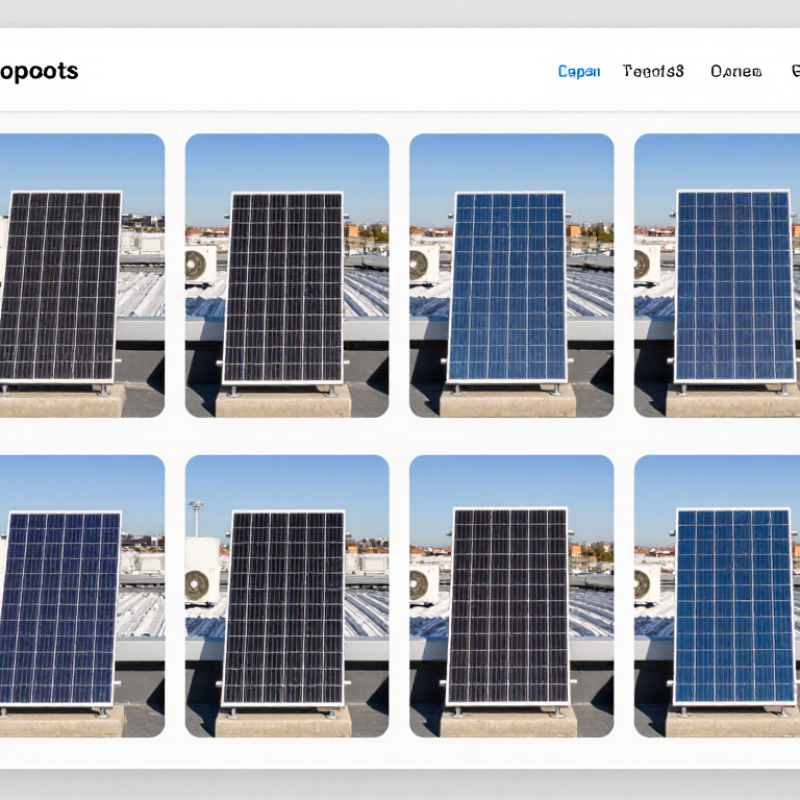
Top 10 Solar Panels for Business in 2026
What Businesses Need to Know Before Choosing Solar Panels
A credible Top 10 list should compare panel performance, not marketing language. Check efficiency, temperature coefficient, degradation, warranty terms, and fire classification. A 500-watt panel may appear powerful, yet roof spacing and inverter limits can reduce its practical value. Measure the roof after accounting for skylights, vents, access paths, and afternoon shade.
Look closely at operating conditions. NREL reports that module temperature, soiling, shading, and system downtime can materially affect annual output. Bifacial panels may perform well over reflective roofs, but their advantage shrinks on dark surfaces. IRENA reported a global weighted-average utility-scale solar cost of USD 0.044 per kilowatt-hour in 2023, showing strong cost progress, not guaranteed savings for every building. Site electricity rates still matter.
The best commercial choices usually combine high efficiency, low degradation, verified testing, and dependable service support. Ask for independent data from IEC testing, NREL research, or the PV Evolution Labs reliability scorecard. Review production estimates using local weather files, not a perfect sunny-day model. Small details matter.
A useful warning.
Some comparisons ignore maintenance access and future roof repairs. That is a costly mistake. Businesses should also test whether panels, inverters, monitoring software, and storage controls work together. The cheapest quote can become expensive when output is missed, replacement access is poor, or warranty claims require distant documentation. Data helps, but a physical roof inspection remains essential.
| Rank | Anonymous Panel Profile | Cell Technology | Rated Power | Module Efficiency | Temperature Coefficient | Annual Degradation | Product Warranty | Performance Warranty | Typical Size | Approx. Weight | Best Business Application |
|---|---|---|---|---|---|---|---|---|---|---|---|
| 1 | Profile A – High-Efficiency Commercial | Monocrystalline N-type TOPCon | 580–620 W | 22.5–23.5% | −0.29%/°C | ≤0.35%/year | 15–25 years | 30 years | Approx. 2.28 × 1.13 m | 28–32 kg | Large rooftops |
| 2 | Profile B – Premium N-type | Monocrystalline N-type TOPCon | 560–610 W | 22.0–23.2% | −0.29%/°C | ≤0.40%/year | 15–25 years | 30 years | Approx. 2.28 × 1.13 m | 27–31 kg | High energy yield |
| 3 | Profile C – Commercial Back-Contact | Monocrystalline IBC | 500–570 W | 22.0–23.8% | −0.29%/°C | ≤0.35%/year | 25 years | 30 years | Approx. 2.15 × 1.05 m | 24–29 kg | Space-constrained sites |
| 4 | Profile D – Dual-Glass Utility | Bifacial monocrystalline TOPCon | 570–625 W | 22.1–23.2% | −0.30%/°C | ≤0.40%/year | 15–20 years | 30 years | Approx. 2.38 × 1.13 m | 31–36 kg | Ground-mounted systems |
| 5 | Profile E – Low-Light Performer | Monocrystalline N-type HJT | 580–625 W | 22.5–23.5% | −0.24%/°C | ≤0.30%/year | 15–25 years | 30 years | Approx. 2.28 × 1.13 m | 28–34 kg | Hot climates |
| 6 | Profile F – Heavy-Duty Bifacial | Monocrystalline PERC bifacial | 535–590 W | 20.7–22.8% | −0.34%/°C | ≤0.45%/year | 12–15 years | 25–30 years | Approx. 2.28 × 1.13 m | 27–33 kg | Open commercial sites |
| 7 | Profile G – Cost-Optimized N-type | Monocrystalline N-type TOPCon | 535–585 W | 21.5–22.8% | −0.30%/°C | ≤0.40%/year | 12–15 years | 25–30 years | Approx. 2.28 × 1.13 m | 26–31 kg | Budget-focused projects |
| 8 | Profile H – Small Commercial Format | Monocrystalline N-type TOPCon | 430–500 W | 21.5–23.0% | −0.30%/°C | ≤0.40%/year | 15–20 years | 30 years | Approx. 1.95 × 1.13 m | 21–26 kg | Smaller rooftops |
| 9 | Profile I – Shade-Tolerant Layout | Monocrystalline half-cell PERC | 450–550 W | 20.5–22.3% | −0.34%/°C | ≤0.50%/year | 12–15 years | 25–30 years | Approx. 2.28 × 1.13 m | 24–30 kg | Complex roof layouts |
| 10 | Profile J – Lightweight Commercial | Monocrystalline glass-glass | 400–470 W | 20.0–22.0% | −0.30%/°C | ≤0.40%/year | 15–20 years | 25–30 years | Approx. 1.90 × 1.05 m | 19–24 kg | Light-load rooftops |


As electricity costs continue rising, many small households in Maharashtra seek sustainabl...Read More
Uttar Pradesh is making significant progress in adopting renewable energy, particularly so...Read More
With the Indian government actively promoting renewable energy through subsidies and polic...Read More
Tired of watching your electricity bills climb month after month and strain your pockets? ...Read More
Switching to solar energy in Gujarat has never been more profitable! With plenty of sunlig...Read More
If you live in Madhya Pradesh and want to save money on power while living a greener lifes...Read More
If you’re a resident of Bangalore looking to save on your skyrocketing electricity b...Read More
If you live in Karnataka and have been looking for an environmentally friendly, cost-effec...Read More
Delhi is a city that thrives on its vibrant energy, and what better way to complement that...Read More
As electricity costs continue rising, many small households in Maharashtra seek ...Read More
Uttar Pradesh is making significant progress in adopting renewable energy, parti...Read More
With the Indian government actively promoting renewable energy through subsidies...Read More


