
Global buyers are paying closer attention to compact, durable door systems for residential, hospitality, and commercial interiors. Grand View Research’s Interior Doors Market analysis identifies renovation activity, space efficiency, and design customization as important demand factors. These trends support growing interest in the Two Panel Barn Door, especially where sliding hardware saves floor space.
Yet style alone cannot define a reliable supplier. The 2024 Houzz & Home Study shows that homeowners continue investing in renovation projects, while material durability and functional performance remain practical concerns. Buyers should examine panel construction, moisture resistance, hardware load ratings, packaging quality, and replacement-part availability. Those details matter when a door travels thousands of kilometers before installation.
Small details matter.
This guide reviews two leading suppliers serving international purchasing needs. It considers manufacturing experience, export capability, customization, quality-control procedures, lead times, and communication standards. Product catalogs can look polished, but catalog images cannot prove coating adhesion or hardware performance. That is where supplier documentation, factory audits, sample orders, and independent inspections become valuable.
The International Trade Centre’s trade data tools also show why destination markets and tariff classifications deserve attention. Costs can change through freight, duties, insurance, and local compliance requirements. A low quotation may not remain low after delivery. I have also found that supplier rankings are never completely objective; project volume, region, and installation conditions can change the best choice. This comparison aims to provide a practical starting point, not a substitute for technical verification.
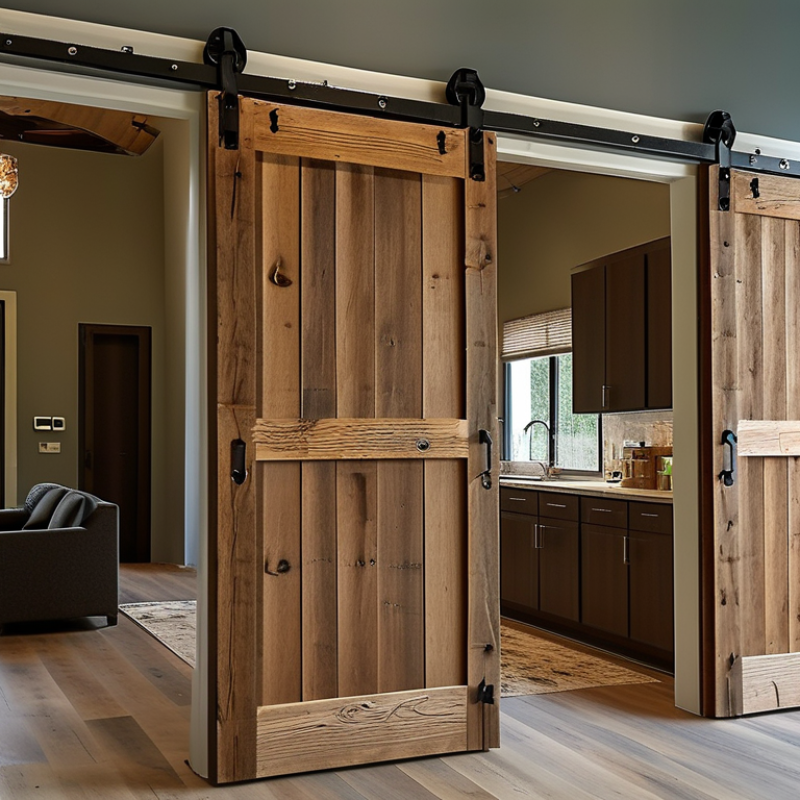
Top Two Panel Barn Door Suppliers for Global Buyers
Global demand for two-panel barn doors is growing across residential, hospitality, and light commercial projects. Many buyers review HS 4418.20 records to identify active exporting markets and reliable supply channels. This code generally covers wooden doors, frames, and thresholds, but classification can vary by product structure and national customs practice.
Trade data reveals shipment frequency, declared values, origin countries, and seasonal purchasing patterns. It does not prove product quality. A large shipment may contain unfinished panels, hardware-free door slabs, or mixed specifications. Buyers should request invoices, packing lists, moisture reports, and clear product photographs before comparing suppliers. Small details matter. A 36-by-84-inch door needs stronger corner protection than a narrow interior panel.
The two strongest supplier profiles are usually manufacturers with stable export records and specialists offering flexible customization. Both should explain wood species, panel thickness, surface treatment, sliding hardware compatibility, and carton testing. Ask for samples before placing a container order. Check whether the stated HS code matches the actual goods, especially when frames, handles, or hardware are packed separately. In practice, supplier data can be incomplete or inconsistent, so independent verification remains necessary. I would also question unusually low prices; they may reflect thinner panels, weaker packaging, or unreported finishing work. Buyer demand is shifting toward moisture-resistant coatings, quiet rollers, recyclable packaging, and custom dimensions. These preferences often affect landed cost more than the door price itself.
Choosing a two-panel barn door supplier requires more than comparing catalog prices. ISO 9001 shows that the supplier operates a documented quality management system. Buyers should request the certificate number, issuing body, and covered production site. Check the expiration date carefully. A certificate from a different factory may not support your order.
FSC certification helps verify responsible forest sourcing. Ask whether the certificate covers the actual wood species, product category, and supply chain. Packaging, invoices, and product labels should use matching claims. This detail matters when projects require traceable materials. However, FSC status does not automatically prove excellent moisture resistance or long service life. The finish still needs practical testing.
ASTM E283 provides a useful measure of air leakage under a specified pressure difference. For barn doors, request the tested assembly, pressure level, leakage result, and seal configuration. A report for a hinged door may not represent a sliding two-panel system. Track gaps, meeting-stile seals, and installation tolerances can change performance. This is often overlooked. ASTM E283 is valuable, but it does not replace onsite installation review. I would also compare sample dimensions, roller movement, panel flatness, and hardware noise before approving bulk production. Perfect documentation is uncommon, so unresolved gaps should be recorded rather than quietly ignored.
Supplier One produces barn door panels in several practical sizes, including 30 x 84, 36 x 84, and 42 x 84 inches. Custom dimensions are available, but they require drawing approval before production. Panel thickness usually ranges from 1.25 to 1.75 inches, depending on the wood structure and finish. This matters when buyers match doors with existing tracks.
The standard minimum order is 20 panels per design. Mixed sizes may be accepted within one shipment, which helps distributors test demand without excessive inventory. Production normally takes 25 to 35 days after deposit and approved specifications. Add another 10 to 18 days for export packing and vessel scheduling. Timelines can change during peak seasons. Confirm them in writing.
Supplier One can load approximately 180 to 240 panels in a 40-foot container, depending on packaging thickness. Each panel is protected with corner guards, foam sheets, and reinforced cartons. The export team prepares commercial invoices, packing lists, and basic product documents for buyer review.
Pre-shipment photos are useful, but they cannot replace physical inspection. A slight finish variation may still appear between samples and larger batches. That weakness deserves attention. Buyers should request a sealed reference sample, moisture readings, and a clear replacement policy before placing repeat orders.
Supplier Two builds barn doors with kiln-dried solid wood, laminated panels, and powder-coated steel hardware. Each material choice affects stability, weight, and installation risk.
The 2023 Global Status Report for Buildings and Construction reported that buildings created about 37% of global energy-related emissions. Therefore, buyers should request moisture content, timber origin, and finish specifications before ordering. These details make sustainability claims more measurable.
Its testing file includes moisture readings, load checks, coating adhesion results, and dimensional inspection records. For sliding systems, ASTM E72 can support structural load evaluation, while ASTM D3359 helps assess coating adhesion.
Testing is useful, but paperwork alone is not proof of field performance. I would request dated photographs, batch numbers, and sample reports from an independent laboratory. One weakness remains: test conditions may not match humid ports or colder warehouses.
Tips: Put Incoterms 2020 in the purchase contract. Under FCA, the buyer usually controls the main carriage after delivery to the named place. Under DAP, the seller arranges transport to the destination, while import clearance usually remains with the buyer.
Confirm packaging, insurance, damage reporting, and document responsibility in writing. The International Chamber of Commerce identifies these allocation points as central to Incoterms 2020.
A practical warranty should cover panel warping, hardware failure, and finish defects for a stated period. Ask whether labor, replacement parts, and freight are included. Longer coverage sounds better, but exclusions matter more.
For global buyers comparing two-panel barn door suppliers, compliance should come before appearance. Supplier One provides timber species, moisture readings, coating details, and batch records. Supplier Two offers fewer documents, but promises faster dispatch. That promise needs testing. ISPM 15 rules require compliant treatment and marking for solid-wood pallets and crates. The World Bank’s 2023 Logistics Performance Index compares 139 economies and highlights customs, infrastructure, and shipment reliability. Ask both suppliers for export records, packaging photos, and destination-specific documents.
Packaging changes the real landed cost. One supplier may use corner guards, foam sleeves, and reinforced cartons. The other may use thinner cartons and save space. Measure the packed door, not only the product. A damaged edge can erase a low freight quote. Request carton dimensions, gross weight, pallet quantity, and stacking limits. Compare ocean, rail, and air rates using identical shipment terms. Freight estimates often shift with fuel, season, port congestion, and inland delivery.
After-sales support reveals operational maturity. One supplier offers replacement panels and hardware kits, with a 48-hour response target. The other provides general email support, but no spare-parts list. That difference matters after installation. Request a written defect process, photo requirements, response times, and warranty exclusions. The OECD Trade Facilitation Indicators show that clearer border procedures can reduce trade costs, although supplier paperwork remains uneven. I have seen neat quotations hide weak packaging assumptions. No quote is perfectly comparable. Use a pilot order, inspect the crate, and record every variance.
Global buyer comparison based on four practical purchasing dimensions: compliance documentation, export packaging, freight-cost efficiency, and after-sales support. Scores are normalized procurement benchmark ratings from 0 to 100; higher scores indicate stronger performance.
Profile 1 shows a stronger overall balance, particularly in compliance and after-sales responsiveness. Profile 2 remains competitive in packaging and freight efficiency. Final purchasing decisions should verify certificates, packing specifications, destination charges, warranty terms, and response-time commitments.
As electricity costs continue rising, many small households in Maharashtra seek sustainabl...Read More
Uttar Pradesh is making significant progress in adopting renewable energy, particularly so...Read More
With the Indian government actively promoting renewable energy through subsidies and polic...Read More
Tired of watching your electricity bills climb month after month and strain your pockets? ...Read More
Switching to solar energy in Gujarat has never been more profitable! With plenty of sunlig...Read More
If you live in Madhya Pradesh and want to save money on power while living a greener lifes...Read More
If you’re a resident of Bangalore looking to save on your skyrocketing electricity b...Read More
If you live in Karnataka and have been looking for an environmentally friendly, cost-effec...Read More
Delhi is a city that thrives on its vibrant energy, and what better way to complement that...Read More
As electricity costs continue rising, many small households in Maharashtra seek ...Read More
Uttar Pradesh is making significant progress in adopting renewable energy, parti...Read More
With the Indian government actively promoting renewable energy through subsidies...Read More