Residential solar is no longer a niche upgrade for environmentally focused homeowners. It has become a practical energy decision across many markets. According to IRENA’s Renewable Capacity Statistics 2025, global solar capacity reached approximately 1,865 GW by the end of 2024. Solar added about 452 GW during that year. These figures show strong momentum, but they do not guarantee savings for every household. Roof direction, local sunlight, electricity tariffs, financing costs, and grid rules still shape the final result.
A careful buyer should examine the complete system, not only the panel brand. The inverter, mounting structure, battery, monitoring software, and installation workmanship all affect performance. The IEA’s Renewables 2024 report expects solar photovoltaic and wind power to provide most new renewable capacity through 2030. That growth may improve product availability and competition. It may also create confusing claims from inexperienced sellers. Check certifications, written warranties, installer experience, degradation rates, and after-sales support. Ask who repairs the system when an error appears during a hot afternoon.
This guide presents ten residential solar buying tips for global buyers. It focuses on realistic comparisons rather than impressive sales promises. Readers will learn how to estimate household demand, compare quotes, evaluate batteries, and review local incentives responsibly. No checklist removes every surprise. Roof leaks, delayed approvals, or unclear warranty terms can still happen. I have also seen buyers focus heavily on module efficiency while overlooking installation quality. That is an expensive blind spot. A reliable decision combines engineering evidence, independent advice, and the homeowner’s daily energy habits. 广益
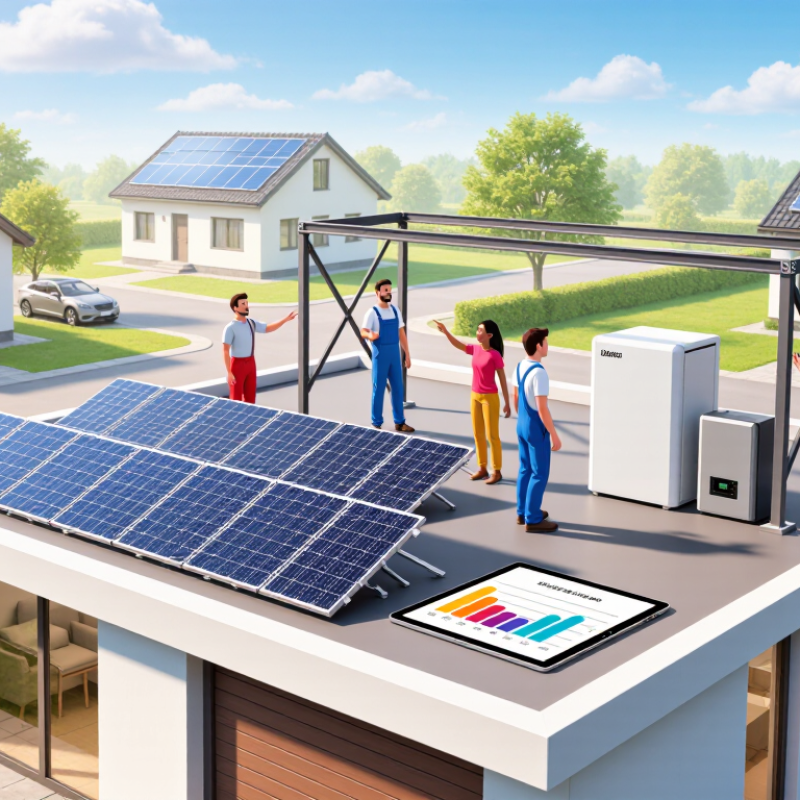
A reliable solar purchase begins with the sunlight available at your actual roof, not a national average. Use NREL PVWatts to estimate annual production from location, roof direction, tilt, and system size. Enter nearby coordinates carefully. A five-kilometre difference can change the result in hilly or coastal areas.
Compare those results with IEA irradiance data. Look for monthly patterns, not only yearly totals. A roof producing well in June may perform poorly during cloudy winter months. Examine peak sun hours, temperature effects, shading, and expected system losses. Panels rarely perform like laboratory ratings. Dust, wiring, inverter limits, and high heat reduce output.
Tip: Request a site-specific assessment before paying a deposit. Ask the installer to show the assumptions behind every forecast. Check whether the calculation includes a realistic degradation rate and local weather history. I once saw a promising estimate ignore afternoon shadows from a nearby tree. The annual figure looked impressive, but the hourly output was weaker. That mistake is easy to repeat. Recheck the roof after rainfall, during midday, and in winter. Data can guide the decision, but imperfect measurements still need practical judgment.
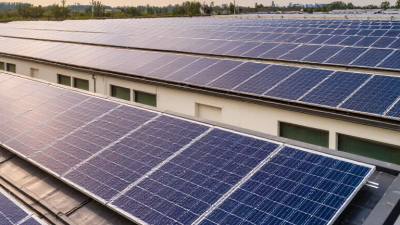
System sizing should begin with module efficiency, not only the panel wattage printed on a datasheet. The IEA PVPS Trends in Photovoltaic Applications 2024 report indicates that commercial crystalline-silicon modules in 2023 commonly reached about 20% to 23% efficiency. For a 6 kW rooftop system, 2 m² modules at 20% efficiency may require roughly 30 modules. At 22.5%, the same area and conditions could reduce the count to about 27 modules. That difference can save several square metres of roof space.
Small gains matter.
However, efficiency is not annual energy yield. The IEA PVPS report shows that deployment conditions vary widely by country, including solar irradiation, temperature, and system design. High heat can reduce output, while partial shade may affect a string more than expected. Compare the module temperature coefficient, low-light performance, degradation rate, and warranty terms. The Fraunhofer ISE Photovoltaics Report 2024 also places leading commercial module efficiencies above 20%, while noting that laboratory records do not represent typical residential products.
A practical estimate uses local irradiation, roof orientation, tilt, shading, and inverter losses. I have seen preliminary sizing look excellent until a chimney shadow was mapped across the afternoon roof. Efficiency alone missed the problem. Recheck the layout with hourly shade data, then compare usable roof area against expected annual kilowatt-hours. Allow some uncertainty; weather is not perfectly predictable. (Sources: IEA PVPS, Trends in Photovoltaic Applications 2024; Fraunhofer ISE, Photovoltaics Report 2024.)
For global buyers, levelized cost of energy, or LCOE, offers a useful comparison. A widely cited 2024 benchmark places residential rooftop solar near $117–$282 per megawatt-hour. That equals roughly 11.7–28.2 cents per kilowatt-hour. The range is wide for a reason. Roof size, labor, sunlight, equipment, and financing can change the result sharply.
Use this figure as a reference, not a promised quotation. A home in a sunny region may produce more electricity each year. A shaded roof may produce much less. Ask installers for a production estimate, degradation rate, maintenance plan, and inverter replacement cost. Check whether battery storage is included. Many LCOE studies treat storage separately, which can make comparisons misleading.
Financing deserves close attention. A low monthly payment may hide a long repayment period or variable fees. Compare the total amount paid with the system’s expected lifetime output. For example, a $15,000 system producing 180,000 kilowatt-hours has a simple energy cost of 8.3 cents per kilowatt-hour before financing and maintenance. That calculation is imperfect, but it exposes unrealistic claims.
I would also test three cases: lower production, higher interest, and delayed repairs. Small assumptions become expensive over twenty years. Local electricity prices matter too. A higher solar LCOE may still be attractive where grid power is costly, but export rules and taxes can change the result. Get written figures in your local currency. Track every assumption.
For global buyers, an installer’s safety review should begin before any price comparison. Ask for a design based on IEC 62548 and applicable local electrical rules. This standard addresses PV array wiring, protection, switching, earthing, and installation conditions. A qualified installer should show cable routes, connector locations, isolators, and overcurrent protection on clear drawings. Do not accept vague promises.
Walk around the proposed site together. Look for shaded roof sections, fragile tiles, drainage paths, and access for firefighters. Cables should be secured, protected from sharp edges, and kept away from standing water. The installer should explain how the array will be isolated during maintenance. Ask for testing records, equipment ratings, structural checks, and an emergency shutdown procedure. Small omissions can become expensive hazards.
IRENA guidance also encourages buyers to consider quality, lifecycle performance, worker safety, and environmental conditions. Request evidence of installer training, inspection routines, waste handling, and realistic energy estimates for your climate. Compare expected output with seasonal sunlight, dust, heat, and storms. Be cautious with perfect forecasts. They are rarely perfect. A useful review may expose weaknesses before installation, although even careful planning cannot remove every risk. Have an independent electrical professional examine the final design before signing.
| No. | Buying Tip | Buyer Review Point | Practical Planning Benchmark | Installer and Safety Review | Required Evidence |
|---|---|---|---|---|---|
| 1 | Define the household energy objective | Decide whether the system is intended to reduce grid purchases, provide backup power, or operate in an off-grid configuration. | Use at least 12 months of electricity bills or interval-meter data. Record annual consumption in kWh and the highest simultaneous load in kW. | The design should distinguish normal grid-connected operation from backup and island operation. Protection and changeover arrangements must be documented. | Electricity bills, load schedule, operating-mode description, and single-line diagram. |
| 2 | Check the solar resource and shading | Review local solar irradiation, roof orientation, seasonal shadows, and weather conditions rather than relying only on a generic production estimate. | Request monthly production estimates using local irradiation data. A shading survey should identify obstructions throughout the day and across the year. | Cable routing, module grouping, and protective devices should reflect different roof orientations and any shaded strings. Do not combine dissimilar strings without an engineering assessment. | Site survey, sun-path or shading report, roof-layout drawing, and monthly energy simulation. |
| 3 | Verify roof structure and mounting loads | Confirm roof age, material, waterproofing condition, wind exposure, snow load, and access for maintenance. | Obtain site-specific structural checks. Wind and snow loads must be calculated from the applicable national or regional building requirements. | Mounting arrangements should provide secure mechanical fixing, corrosion resistance, protective separation from the roof, and safe cable support. Penetrations must be weatherproofed. | Structural assessment, mounting plan, fixing schedule, load calculations, and roof warranty conditions. |
| 4 | Match system size to usable roof area | Measure clear roof area after setbacks, walkways, vents, skylights, fire-access routes, and maintenance zones are excluded. | Allow space for module dimensions, row spacing, drainage, cable routes, and future access. The final layout should show dimensions and orientation. | IEC 62548 emphasizes safe PV array design, wiring, protection, isolation, and installation arrangements. Local fire and electrical rules may impose additional setbacks. | Dimensioned roof plan, module arrangement, access routes, fire-safety review, and equipment clearances. |
| 5 | Review DC voltage and string design | Check the number of modules in each string against the inverter operating range and the maximum system voltage under the coldest expected conditions. | The design must use temperature-corrected open-circuit voltage and operating voltage. It must remain within the limits of every connected component. | Apply IEC 62548 principles for PV array wiring, polarity, isolation, overcurrent protection, conductor selection, and protection against electric shock. | String calculation, temperature assumptions, inverter limits, cable specifications, polarity plan, and DC protection schedule. |
| 6 | Confirm inverter and grid compatibility | Check AC voltage, frequency, phase arrangement, export limits, communication requirements, and local grid-connection rules. | The inverter rating should be compatible with the PV array, household demand, ambient temperature, and any battery or backup loads. | Grid-connected equipment requires appropriate anti-islanding behavior, AC isolation, overcurrent protection, earthing, and utility approval where applicable. | Grid-approval documents, AC single-line diagram, protection settings, inverter data sheet, and export-control method. |
| 7 | Evaluate battery storage separately | Define required backup duration, essential circuits, usable energy, charging source, location, ventilation, and temperature conditions. | Size usable battery capacity from essential-load kW, required backup hours, allowable depth of discharge, conversion losses, and minimum reserve. | Battery isolation, overcurrent protection, emergency shutdown, fault detection, enclosure, clearances, and fire-safety provisions must follow applicable local requirements. | Backup-load schedule, battery sizing calculation, installation-location assessment, emergency procedure, and maintenance plan. |
| 8 | Demand complete electrical protection | Ask how the system will manage overloads, short circuits, lightning or surge exposure, earth faults, and accessible energized conductors. | Protection ratings must be selected from calculated current, voltage, prospective fault current, cable ampacity, environmental conditions, and equipment instructions. | IEC 62548 covers key PV array safety provisions, including switching, protective devices, wiring, earthing, and protection against hazardous touch voltage. National rules remain applicable. | Protection coordination study, earthing and bonding diagram, surge-protection assessment, isolation points, labels, and warning signs. |
| 9 | Assess installer competence and workmanship | Select an installer familiar with local permitting, electrical inspection, roof work, commissioning, and the relevant edition of IEC 62548. | Require a written scope covering design, permits, installation, testing, handover, maintenance, and responsibility for defects. | Cables should be protected from abrasion, UV exposure, water accumulation, sharp edges, and unsupported sagging. Connectors should be compatible, fully engaged, and accessible for inspection. | Installer qualifications, permits, inspection records, commissioning checklist, test results, photographs, and as-built drawings. |
| 10 | Compare lifecycle value, not only purchase price | Compare installed cost, expected annual energy, maintenance, replacement items, monitoring, insurance, export income, and end-of-life handling. | Use a transparent model showing system capacity in kWp, annual yield in kWh, performance assumptions, degradation assumptions, tariff changes, and payback sensitivity. | IRENA guidance supports evaluating renewable-energy projects through resource assessment, system performance, costs, policy conditions, finance, and long-term operation rather than headline price alone. | Itemized quotation, production model, assumptions register, service terms, recycling plan, monitoring access, and total-cost comparison. |
Note: IEC 62548 and IRENA publications provide technical and planning guidance, while mandatory requirements can vary by country, utility, building authority, fire authority, and electrical code. The final design should be reviewed and approved by a qualified local professional.
A solar system must fit your local grid, not only your roof. Check voltage, phase type, outage frequency, export limits, and connection approval procedures. The IEA reported that renewables supplied about 30% of global electricity in 2023. However, national progress does not guarantee reliable service in your town. Ask the utility for written interconnection rules. Confirm whether surplus electricity receives credits, payments, or no compensation.
Tip: Request recent bills, a site assessment, and the local electricity tariff before comparing system prices. Record evening consumption separately. Many households produce enough power at noon but still buy electricity after sunset. A simple spreadsheet helps, although it can mislead when tariffs change during the year.
Battery storage requires careful checking. Compare usable capacity, round-trip efficiency, warranty conditions, temperature limits, and backup circuits. Storage may be valuable where outages are common or evening prices are high. It may be unnecessary where export credits remain generous. Review national and municipal requirements for installation, fire protection, recycling, and insurance. Policies can change quickly. Verify every claim with the current regulator, utility, or official government portal, then compare it with the latest IEA statistics. An old article is not evidence. A low quotation is not always a saving.
As electricity costs continue rising, many small households in Maharashtra seek sustainabl...Read More
Uttar Pradesh is making significant progress in adopting renewable energy, particularly so...Read More
With the Indian government actively promoting renewable energy through subsidies and polic...Read More
Tired of watching your electricity bills climb month after month and strain your pockets? ...Read More
Switching to solar energy in Gujarat has never been more profitable! With plenty of sunlig...Read More
If you live in Madhya Pradesh and want to save money on power while living a greener lifes...Read More
If you’re a resident of Bangalore looking to save on your skyrocketing electricity b...Read More
If you live in Karnataka and have been looking for an environmentally friendly, cost-effec...Read More
Delhi is a city that thrives on its vibrant energy, and what better way to complement that...Read More
As electricity costs continue rising, many small households in Maharashtra seek ...Read More
Uttar Pradesh is making significant progress in adopting renewable energy, parti...Read More
With the Indian government actively promoting renewable energy through subsidies...Read More